Days in the Sun

From solstice to solstice, this six month long exposure compresses time from the 21st of June till the 21st of December, 2011, into a single point of view.

Wolf Moon

A full moon looking yellowish-orange, which the ancients and old people dubbed as wolf moon, accompanied by many mythical stories.

A Star Factory

These are the places in the Milky Way galaxy where stars are formed. Awesome, isn't it?

The Ghost Nebula

The Ghost Nebula, after being captured by the Hubble space telescope

Saturn's Iapetus Moon

This is Saturn's Iapetus moon, which looks painted and colorful, setting it apart from the other moons.

Tuesday, March 13, 2012

Electromagnetic Radiations


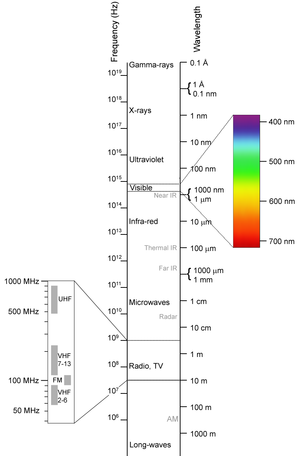
The electromagnetic spectrum is the range of all possible frequencies of electromagnetic radiation. The "electromagnetic spectrum" of an object is the characteristic distribution of electromagnetic radiation emitted or absorbed by that particular object.
The electromagnetic spectrum extends from low frequencies used for modern radio communication to gamma radiation at the short-wavelength (high-frequency) end, thereby covering wavelengths from thousands of kilometers down to a fraction of the size of an atom. It is for this reason that the electromagnetic spectrum is highly studied for spectroscopic purposes to characterize matter. The limit for long wavelength is the size of the universe itself, while it is thought that the short wavelength limit is in the vicinity of thePlanck length,although in principle the spectrum is infinite and continuous.

PropagationElectromagnetic Waves are interactions of electric and magnetic fields perpendicular to each other. This enables the propagation of the waves even in vacuum. The velocity of the EM wave is always a constant which is equal to 299,792,458 m/s or simply 3 x 10^8m/s or approx. 186,282 miles/s.
Thus for different waves, there are ranges of frequencies and wavelengths, the velocity of light being given by    
  c = fλ,
where c is velocity of light,
f = frequency of the wave &
λ = wavelength of the wave.


On the basis of frequencies and wavelengths, the EM radiations is divided into different types of radiations.
Types of Radiations: 
  1. Gamma radiation
  2. X-ray radiation
  3. Ultraviolet radiation
  4. Visible radiation
  5. Infrared radiation
  6. Microwave radiation
  7. Radio waves

Sunday, March 11, 2012

Newton's Laws of motion


Newton's laws of motion are three physical laws that form the basis for classical mechanics. They describe the relationship between the forces acting on a body and its motion due to those forces. They have been expressed in several different ways over nearly three centuries, and can be summarized as follows:
  1. First law: Every body persists in its state of being at rest or of moving uniformly straight forward, except insofar as it is compelled to change its state by force impressed
  2. Second law The second law states that the net force on a particle is equal to the time rate of change of its linear momentum p in an inertial reference frame
  3. Third law To every action there is always an equal and opposite reaction: or the forces of two bodies on each other are always equal and are directed in opposite directions.

The three laws of motion were first compiled by Sir Isaac Newton in his work Philosophiæ Naturalis Principia Mathematica, first published in 1687. Newton used them to explain and investigate the motion of many physical objects and systems. For example, in the third volume of the text, Newton showed that these laws of motion, combined with his law of universal gravitation, explained Kepler's laws of planetary motion.
Newton's laws are applied to bodies (objects) which are considered or idealized as a particle, in the sense that the extent of the body is neglected in the evaluation of its motion, i.e., the object is small compared to the distances involved in the analysis, or the deformation and rotation of the body is of no importance in the analysis. Therefore, a planet can be idealized as a particle for analysis of its orbital motion around a star.
In their original form, Newton's laws of motion are not adequate to characterize the motion of rigid bodies and deformable bodies. Leonard Euler in 1750 introduced a generalization of Newton's laws of motion for rigid bodies called the Euler's laws of motion, later applied as well for deformable bodies assumed as a continuum. If a body is represented as an assemblage of discrete particles, each governed by Newton’s laws of motion, then Euler’s laws can be derived from Newton’s laws. Euler’s laws can, however, be taken as axioms describing the laws of motion for extended bodies, independently of any particle structure.
Newton's Laws hold only with respect to a certain set of frames of reference called Newtonian or inertial reference frames. Some authors interpret the first law as defining what an inertial reference frame is; from this point of view, the second law only holds when the observation is made from an inertial reference frame, and therefore the first law cannot be proved as a special case of the second. Other authors do treat the first law as a corollary of the second. The explicit concept of an inertial frame of reference was not developed until long after Newton's death.
In the given interpretation mass, acceleration, momentum, and (most importantly) force are assumed to be externally defined quantities. This is the most common, but not the only interpretation: one can consider the laws to be a definition of these quantities.
Newtonian mechanics has been superseded by special relativity, but it is still useful as an approximation when the speeds involved are much slower than the speed of light

Friday, March 2, 2012

Cohesive and Adhesive Forces


Cohesion: Cohesion or cohesive attraction or cohesive force is the action or property of like molecules sticking together, being mutually attractive. This is an intrinsic property of a substance that is caused by the shape and structure of its molecules which makes the distribution of orbiting electrons irregular when molecules get close to one another, creating electrical attraction that can maintain a macroscopic structure such as a water drop.
Cohesion
Cohesion, along with adhesion (attraction between unlike molecules), helps explain phenomena such as meniscus, surface tension and capillary action.Water, for example, is strongly cohesive as each molecule may make four hydrogen bonds to other water molecules in a tetrahedral configuration. This results in a relatively strong Coulomb force between molecules. Van der Waals gases such as methane, however, have weak cohesion due only toVan der Waals forces that operate by induced polarity in non-polar molecules.
Mercury in a glass flask is a good example of the effects of the ratio between cohesive and adhesive forces. Because of its high cohesion and low adhesion to the glass, mercury does not spread out to cover the top of the flask, and if enough is placed in the flask to cover the bottom, it exhibits a stronglyconvex meniscus, where the meniscus of water is concave. Mercury will not wet the glass, unlike water and many other liquids, and if the glass is tipped, it will 'roll' around inside.

Adhesion: It is the tendency of dissimilar particles and/or surfaces to cling to one another. The forces that cause adhesion and cohesion can be divided into several types. The intermolecular forces responsible for the function of various kinds of stickers and sticky tape fall into the categories of chemical adhesion, dispersive adhesion, and diffusive adhesion. In addition to the cumulative magnitudes of these intermolecular forces, there are certain emergent mechanical effects that will also be discussed at the end of the article.
Adhesion

Saturday, February 18, 2012

Big Bang Theory


The Big Bang theory is the prevailing cosmological model that explains the early development of the Universe. According to the Big Bang theory, the Universe was once in an extremely hot and dense state which expanded rapidly. This rapid expansion caused the young Universe to cool and resulted in its present continuously expanding state. According to the most recent measurements and observations, this original state existed approximately 13.7 billion years ago, which is considered the age of the Universe and the time the Big Bang occurred.After its initial expansion from a singularity, the Universe cooled sufficiently to allow energy to be converted into various subatomic particles. It would take thousands of years for some of these particles (protons, neutrons, and electrons) to combine and form atoms, the building blocks of matter. The first element produced was hydrogen, along with traces of helium and lithium. Eventually, clouds of hydrogen would coalesce through gravity to form stars, and the heavier elements would be synthesized either within stars or during supernovae.
Edwin Hubble proposed the Big Bang Theory.

Time Line:
The earliest phases of the Big Bang are subject to much speculation. In the most common models the Universe was filled homogeneously and isotropically with an incredibly high energy density and huge temperatures and pressures and was very rapidly expanding and cooling. Approximately 10−37 seconds into the expansion, a phase transition caused a cosmic inflation, during which the Universe grew exponentially. After inflation stopped, the Universe consisted of a quark–gluon plasma, as well as all other elementary particles.Temperatures were so high that the random motions of particles were at relativistic speeds, and particle–antiparticle pairs of all kinds were being continuously created and destroyed in collisions. At some point an unknown reaction called baryogenesis violated the conservation of baryon number, leading to a very small excess of quarks and leptons over antiquarks and anti-leptons—of the order of one part in 30 million. This resulted in the predominance of matter over antimatter in the present Universe.
A few minutes into the expansion, when the temperature was about a billion (one thousand million; 109; SI prefix giga-) kelvin and the density was about that of air, neutrons combined with protons to form the Universe's deuterium and helium nuclei in a process called Big Bang nucleosynthesis. Most protons remained uncombined as hydrogen nuclei. As the Universe cooled, the rest mass energy density of matter came to gravitationally dominate that of the photon radiation. After about 379,000 years the electrons and nuclei combined into atoms (mostly hydrogen); hence the radiation decoupled from matter and continued through space largely unimpeded. This relic radiation is known as the cosmic microwave background radiation or CMB.


Monday, February 13, 2012

Fossil Fuel

Fossil Fuels are formed due to the anaerobic decomposition of organic matter. Plants and animals buried deep down in the earth's crust decompose in the absence of air under high pressure and temperature. The formation takes millions of years to take place.

Fossil Fuels contain high percentage of carbon. The most important of the fossil fuels are Coal, Petroleum and Natural Gas.
It was estimated by the Energy Information Administration that in 2007 primary sources of energy consisted of petroleum 36.0%, coal 27.4%, natural gas 23.0%, amounting to an 86.4% share for fossil fuels in primary energy consumption in the world. Non-fossil sources in 2006 included hydroelectric 6.3%, nuclear 8.5%, and others (geothermalsolartidewindwoodwaste) amounting to 0.9%. World energy consumption was growing about 2.3% per year.


Fossil Fuels are non-renewable sources of energy since they take millions of years to form and can be exhausted quickly. 


Coal
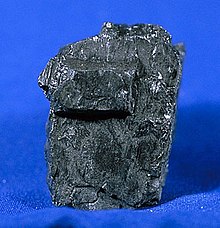
Coal: Coal is a combustible black or brownish-black sedimentary rock usually occurring in rock strata in layers or veins called coal beds or coal seams. The harder forms, such as anthracite coal, can be regarded as metamorphic rock because of later exposure to elevated temperature and pressure. Coal is composed primarily of carbon along with variable quantities of other elements, chiefly hydrogen, sulfur, oxygen, and nitrogen.
Throughout history, coal has been a useful resource for human consumption. It is primarily burned as a fossil fuel for the production of electricity and/or heat, and is also used for industrial purposes such as refining metals. Coal forms when dead plant matter is converted into peat, which in turn is converted into lignite, then anthracite. This involves biological and geological processes that take place over a long period of time.
petroleum

PetroleumPetroleum (Greekpetra (rock) + Latinoleum(oil)) or crude oil is a naturally occurring, flammable liquid consisting of a complex mixture of hydrocarbons of various molecular weights and other liquid organic compounds, that are found in geologic formations beneath the Earth's surface. A fossil fuel, it is formed when large quantities of dead organisms, usually zoo plankton and algae, are buried underneath sedimentary rock and undergo intense heat and pressure. Petroleum is recovered mostly through oil drilling. This latter stage comes after the studies of structural geology (at the reservoir scale), sedimentary basin analysis, reservoir characterization (mainly in terms of porosity and permeable structures). It is refined and separated, most easily by boiling point, into a large number of consumer products, from petrol and kerosene to asphalt and chemical reagents used to make plastics and pharmaceuticals. Petroleum is used in manufacturing a wide variety of materials, and it is estimated that the world consumes about 88 million barrels each day. The use of fossil fuels such as petroleum can have a negative impact on Earth's biosphere, releasing pollutants and greenhouse gases into the air and damaging ecosystems through events such as oil spills.
Natural GasNatural gas is a naturally occurring hydrocarbon gas mixture consisting primarily of methane, with up to 20 percent concentration of other hydrocarbons (usually ethane) as well as small amounts of impurities such as carbon dioxide. Natural gas is widely used and is an important energy source in many applications including heating buildings, generating electricity, providing heat and power to industry and vehicles and is also a feed stock in the manufacture of products such as fertilizers.
combustion of
natural gas

Sunday, February 12, 2012

Chemical Energy

Chemical energy is the potential of a chemical substance to undergo a transformation through a chemical reaction or, to transform other chemical substances. Breaking or making of chemical bonds involves energy, which may be either absorbed or evolved from a chemical system. Energy that can be released (or absorbed) because of a reaction between a set of chemical substances is equal to the difference between the energy content of the products and the reactants. This change in energy is called the constipation problems of a chemical reaction. Where \Delta {U_f^\circ}_{\mathrm {reactants}} is the internal energy of formation of the reactant molecules that can be calculated from the bond energies of the various chemical bonds of the molecules under consideration and \Delta {U_f^\circ}_{\mathrm {products}} is the internal energy of formation of the product molecules. The internal energy change of a process is equal to the heat change if it is measured under conditions of constant volume, as in a closed rigid container such as a bomb calorimeter. However, under conditions of constant pressure, as in reactions in vessels open to the atmosphere, the measured heat change is not always equal to the internal energy change, because pressure-volume work also releases or absorbs energy. (The heat change at constant pressure is called the enthalpy change; in this case the enthalpy of formation).
Another useful term is the heat of combustion, which is the energy released due to a combustion reaction and often applied in the study of fuels. Food is similar to hydrocarbon fuel and carbohydrate fuels, and when it is oxidized, its caloric content is similar (though not assessed in the same way as a hydrocarbon fuel — see food energy).
In chemical thermodynamics the term used for the chemical potential energy is chemical potential, and for chemical transformation an equation most often used is the Gibbs-Duhem equation.

[edit] Chemical potential energy

Chemical potential energy is a form of potential energy related to the structural arrangement of atoms or molecules. This arrangement may be the result of chemical bonds within a molecule or otherwise. Chemical energy of a chemical substance can be transformed to other forms of energy by a chemical reaction. As an example, when a fuel is burned the chemical energy is converted to heat, same is the case with digestion of food metabolized in a biological organism. Green plants transform solar energy to chemical energy through the process known as photosynthesis, and electrical energy can be converted to chemical energy through electrochemical reactions.
The similar term chemical potential is used to indicate the potential of a substance to undergo a change of configuration, be it in the form of a chemical reaction, spatial transport, particle exchange with a reservoir.