Days in the Sun

From solstice to solstice, this six month long exposure compresses time from the 21st of June till the 21st of December, 2011, into a single point of view.

Wolf Moon

A full moon looking yellowish-orange, which the ancients and old people dubbed as wolf moon, accompanied by many mythical stories.

A Star Factory

These are the places in the Milky Way galaxy where stars are formed. Awesome, isn't it?

The Ghost Nebula

The Ghost Nebula, after being captured by the Hubble space telescope

Saturn's Iapetus Moon

This is Saturn's Iapetus moon, which looks painted and colorful, setting it apart from the other moons.

Wednesday, May 25, 2011

Special article: Android OS


Android
 Android is a software stack for mobile devices. Android includes an operating system,middle ware and key applications. Android OS smartphones are one of the best and most selling phones in the world. It's the best-selling Smartphone platform. All prefer smartphones with Android OS because of the large extent of apps or applications. Google Inc. purchased the initial developer of the software, Android Inc., in 2005. Android's mobile operating system is based on the Linux kernel. Google and other members of the Open Handset Alliance collaborated on Android's development and release. The Android Open Source Project (AOSP) is tasked with the maintenance and further development of Android. 


 Android has a large community of developers writing applications ("apps") that extend the functionality of the devices. There are currently over 200,000 apps available for Android, the main reasons why people prefer Android smartphones. Android Market is the online app store run by Google, though apps can also be downloaded from third-party sites. Developers write primarily in the Java language, controlling the device via Google-developed Java libraries. 

 Voice recognition, hand-writing recognition, smart virtual keypad, many free and fun widgets on your home screen, Quick look features, faster and compliant browsers and many other superb features! are on Android. 
 Games and other apps like angry bird, entangled, Blosics etc. improve the touch experience and make it a place of fun. Special Ringtones, sound effects, 3D effects also enhance it. 
 Over 5MP cameras with auto-focus,  HD cameras, secondary cameras over 1MP, at least 760 MHz processors, LED Flash etc. are also some of the amazing features of Android smartphones.


 The Android open-source software stack consists of Java applications running on a Java-based, object-oriented application framework on top of Java core libraries running on a Dalvik virtual machine featuring JIT compilation. Libraries written in C include the surface manager, OpenCore media framework, SQLite relational database management system, OpenGL ES 2.0 3D graphics API, WebKit layout engine, SGL graphics engine, SSL, and Bionic libc. The Android operating system, including the Linux kernel, consists of roughly 12 million lines of code including 3 million lines of XML, 2.8 million lines of C, 2.1 million lines of Java, and 1.75 million lines of C++.

 All smartphones being capacitive touch, multi-tasking or multi-touch is also available. This brings a whole lot of fun in the ouch experience. 

Recent Versions of Android OS are: 
  1. 2.0/2.1 (Eclair)
  2. 2.2 (Froyo)
  3. 2.3 (Gingerbread)
  4. 3.0/3.1 (Honeycomb)
  5. Ice Cream Sandwich

 2011, Motorola will be releasing the worlds most powerful smartphone Motorola Atrix 4G. 2011 is awaiting the release of 4G phones. Samsung, HTC, Motorola, Sony Ericsson are some of the leading world phone producers who are releasing 4G phones.

Competitors:  There are many competitors for Android like Mac, Nokia(Symbian) etc. which threaten the company. But the recent growth of android has pushed back its competitors. To compete back with the Android, Nokia is making a new OS which could compete with Android and Mac is upgrading its apps, environment and experience. 

Wednesday, May 18, 2011

Capacitive sensing


You have now understood how capacitive touch screens work. Now let me help you in understanding how the designs are mad and how multi-tasking is performed.

Design: Capacitive sensors can be constructed from many different media, such as copper, Indium tin oxide (ITO) and printed ink. Copper capacitive sensors can be implemented on standard FR4 PCBs as well as on flexible material. ITO allows the capacitive sensor to be up to 90% transparent (for one layer solutions). The size and spacing of the capacitive sensor are both very important to the sensor's performance. In addition to the size of the sensor, and its spacing relative to the ground plane, the type of ground plane used is very important. Since the parasitic capacitance of the sensor is related to the electric field's (e-field) path to ground, it is important to choose a ground plane that limits the concentration of e-field lines with no conductive object present.

Designing a capacitance sensing system requires first picking the type of sensing material (FR4, Flex, ITO, etc.). One also needs to understand the environment the device will operate in, such as the full operating temperature range, what radio frequencies are present and how the user will interact with the interface.
There are two types of capacitive sensing system: mutual capacitance, where the object (finger, conductive stylus) alters the mutual coupling between row and column electrodes, which are scanned sequentially; and self- or absolute capacitance where the object (such as a finger) loads the sensor or increases the parasitic capacitance to ground. In both cases, the difference of a preceding absolute position from the present absolute position yields the relative motion of the object or finger during that time. The technologies are elaborated in the following section. 

Surface capacitance:


In this basic technology, only one side of the insulator is coated with a conductive layer. A small voltage is applied to the conductive layer, resulting in a uniform electrostatic field. When a conductor, such as a human finger, touches the uncoated surface, a capacitor is dynamically formed. Due to the sheet resistance of the surface, each corner is measured to have a different effective capacitance. The sensor's controller can determine the location of the touch indirectly from the change in the capacitance as measured from the four corners of the panel; the larger the change in capacitance, the closer the touch is to that corner. As it has no moving parts, it is moderately durable. But it has limited resolution, is prone to false signals from parasitic capacitive coupling, and needs calibration during manufacture. It is therefore most often used in simple applications such as industrial controls and kiosks.


Projected capacitance:

Projected capacitive touch (PCT) technology is a capacitive technology which allows more accurate and flexible operation, by etching the conductive layer. An X-Y grid is formed either by etching one layer to form a grid pattern of electrodes, or by etching two separate, perpendicular layers of conductive material with parallel lines or tracks to form the grid; comparable to the pixel grid found in many liquid crystal displays (LCD).
The greater resolution of PCT allows operation with no direct contact, such that the conducting layers can be coated with further protective insulating layers, and operate even under screen protectors, or behind weather and vandal-proof glass. Due to the top layer of a PCT being glass, PCT is a more robust solution versus resistive touch technology. Depending on the implementation, an active or passive stylus can be used instead of or in addition to a finger. This is common with point of sale devices that require signature capture. Gloved fingers may or may not be sensed, depending on the implementation and gain settings. Conductive smudges and similar interference on the panel surface can interfere with the performance. Such conductive smudges come mostly from sticky or sweaty finger tips, especially in high humidity environments. Collected dust, which adheres to the screen due to the moisture from fingertips can also be a problem. There are two types of PCT: self capacitance, and mutual capacitance.
Mutual capacitance:
Mutual capacitive sensors have a capacitor at each intersection of each row and each column. A 12-by-16 array, for example, would have 192 independent capacitors. A voltage is applied to the rows or columns. Bringing a finger or conductive stylus near the surface of the sensor changes the local electrostatic field which reduces the mutual capacitance. The capacitance change at every individual point on the grid can be measured to accurately determine the touch location by measuring the voltage in the other axis. Mutual capacitance allows multi-touch operation where multiple fingers, palms or stylus can be accurately tracked at the same time.
Self-capacitance:
Self-capacitance sensors can have the same X-Y grid as mutual capacitance sensors, but the columns and rows operate independently. With self-capacitance, the capacitive load of a finger is measured on each column or row electrode by a current meter. This method produces a stronger signal than mutual capacitance, but it is unable to resolve accurately more than one finger, which results in "ghosting", or misplaced location sensing.


Thursday, May 12, 2011

Why do we expect life mostly on Mars?


There had been strange beliefs that life existed on Mars and Moon. But the concept of life on Moon was discarded when the face on the moon(many craters on its surface looked like a face) was proved to be only the craters. But the search for Extra Terrestrial Life continued, and people thought that there was life form on Mars.
 And the main reasons for that are:


Photo of microscopic rock formations
indicating past signs of water
  1. Misunderstanding: In 1877, an Italian Astronomer Giovanni Schiparelli saw a series on Mars. He called them canali, the Italian word for channels. This word was translated into English as 'canals', by mistake. Thus many people thought that intelligent life on Mars, dug these canals.
  2. Discovery of water(indirectly):  The rocks that were found on Mars' surface, showed signs of water. The photo alongside shows the formation of a microscopic rock which is possible only with the presence of water.
  3. Channels: Viewed from the telescope, Mars shows lines on its surface. These lines must probably be channels in which water would flow, and also to become permanent, it has to be water.
  4. Discovery of Hydrocarbons: Hydrocarbons like Methane and Formaldehyde were detected on Mars recently by the satellites on Mars and hint that life could have existed in it. Methane gas is produced when organic matter(like life) decomposes.


Wednesday, May 11, 2011

Mars


Mars (Greek: Ares) is the god of War. The planet probably got this name due to its red color; Mars is sometimes referred to as the Red Planet. (An interesting side note: the Roman god Mars was a god of agriculture before becoming associated with the Greek Ares; those in favor of colonizing and terraforming Mars may prefer this symbolism.) The name of the month March derives from Mars.


ARE THERE REALLY CANALS ON MARS?
Mars has been known since prehistoric times. Of course, it has been extensively studied with ground-based observatories. But even very large telescopes find Mars a difficult target, it's just too small. It is still a favorite of science fiction writers as the most favorable place in the Solar System (other than Earth!) for human habitation. But the famous "canals" "seen" by Lowell and others were, unfortunately, just as imaginary as Barsoomian princesses.
The canals weren't actually 'canals'. It was 'canales' which, with passage of time became 'canals' and rumors began that there were ET life on Mars that built the canals.


During the Solar system formation, Mars was created out of the protoplanetary disk that orbited the Sun as the result of a stochastic process of run-away accretion. Mars has many distinctive chemical features caused by its position in the Solar System. Elements with comparatively low boiling points such as chlorine, phosphorus and sulphur are much more common on Mars than Earth; these elements were probably removed from areas closer to the Sun by the young Sun's powerful solar wind.


The Phoenix lander returned data showing Martian soil to be slightly alkaline and containing elements such as magnesium, sodium,potassium and chloride. These nutrients are found in gardens on Earth, and are necessary for growth of plants. Experiments performed by the Lander showed that the Martian soil has a basic pH of 8.3, and may contain traces of the salt perchlorate.

Streaks are common across Mars and new ones appear frequently on steep slopes of craters, troughs, and valleys. The streaks are dark at first and get lighter with age. Sometimes the streaks start in a tiny area which then spreads out for hundreds of meters. They have also been seen to follow the edges of boulders and other obstacles in their path. The commonly accepted theories include that they are dark underlying layers of soil revealed after avalanches of bright dust or dust devils. However, several explanations have been put forward, some of which involve water or even the growth of organisms.


Mars has two permanent polar ice caps. During a pole's winter, it lies in continuous darkness, chilling the surface and causing 25–30% of the atmosphere to condense out into thick slabs of CO2 ice (dry ice).When the poles are again exposed to sunlight, the frozen CO2 sublimes, creating enormous winds that sweep off the poles as fast as 400 km/h. These seasonal actions transport large amounts of dust and water vapor, giving rise to Earth-like frost and large cirrus clouds. Clouds of water-ice were photographed by the Opportunity rover in 2004.
The polar caps at both poles consist primarily of water ice. Frozen carbon dioxide accumulates as a thin layer about one metre thick on the north cap in the northern winter only, while the south cap has a permanent dry ice cover about eight metres thick. The northern polar cap has a diameter of about 1,000 kilometres during the northern Mars summer, and contains about 1.6 million cubic kilometres of ice, which if spread evenly on the cap would be 2 kilometres thick. (This compares to a volume of 2.85 million cubic kilometres for the Greenland ice sheet.) The southern polar cap has a diameter of 350 km and a thickness of 3 km. The total volume of ice in the south polar cap plus the adjacent layered deposits has also been estimated at 1.6 million cubic kilometers. Both polar caps show spiral troughs, which are believed to form as a result of differential solar heating, coupled with the sublimation of ice and condensation of water vapor.
The seasonal frosting and defrosting of the southern ice cap results in the formation of spider-like radial channels carved on 1 meter thick ice by sunlight. Then, sublimed COand probably water increase pressure in their interior producing geyser-like eruptions of cold fluids often mixed with dark basaltic sand or mud. This process is rapid, observed happening in the space of a few days, weeks or months, a growth rate rather unusual in geology, especially for Mars.


Sunday, May 8, 2011

Consequences of rotation of the Earth

The Earth has always been in constant rotation since its formation. Like other planets in the Solar System, Earth was formed by the Molecular Cloud. But the speed of rotation has been decreasing since its formation.
Lets see the results of its rotation. 
  1. Day-Night phenomenon: The primary effect is the phenomenon of day-night. As Earth rotates on its axis, the day and nights are caused. The part of the Earth that receives sunlight experiences 'day' and the part that does not experiences 'night'.


  2.  Coriolis effect: The rotation of the Earth causes Coriolis Effect and results in changes in weather and atmospheric pressure. This leads to a certain patten of rotation of the winds in both the hemispheres. In the Northern hemisphere, in high pressure winds rotate clockwise and low pressure winds rotate
    anti-clockwise(counter clockwise). Its the vice-versa in the Southern hemisphere. This causes differences in wind pressure all over the world.
  3. Change in the shape of the Earth: The Earth's shape isn't exactly spherical. Its flattened near the poles and bulged near the Equator. This is due to the rotation of the Earth. Thus the Earth is known as a spheroid or oblate sphere.


Friday, April 29, 2011

Special article: Theory of General relativity

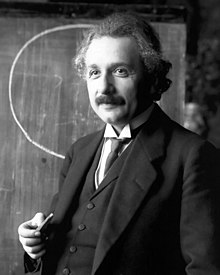
  General relativity or the general theory of relativity is the geometric theory of gravitation published by Albert Einstein in 1916. It is the current description of gravitation in modern physics. The general relativity showed the connection between the space and time or space-time. It is now the basis of understanding the universal law of gravitation proposed by Sir Isaac Newton. Practically, Albert Einstein was the only person who had understood the relation between space and time and also why planets revolved round the Sun.


We all know that there are three dimensions:

  • Length
  • Breadth 
  • and Height
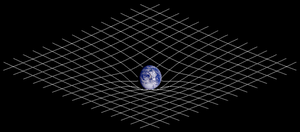
Space as a typolene
 It was observed that time actually ran slower near heavier bodies and faster in vacuum. This observation led Einstein to propose a whole new theory called the "Theory of General Relativity". Einstein took an interest in time, which is when he said that time was the Fourth dimension. He described that space was the place where all the four dimensions coincided with each other. He described that as a layer of typolene which bent due to mass.  
 This way he said that, just as when heavy objects were put on a layer of typolene, it bent, the same way the space also bent with the heavier mass of the planets. Thus he explained the relation between time and space and gravitation.