Days in the Sun

From solstice to solstice, this six month long exposure compresses time from the 21st of June till the 21st of December, 2011, into a single point of view.

Wolf Moon

A full moon looking yellowish-orange, which the ancients and old people dubbed as wolf moon, accompanied by many mythical stories.

A Star Factory

These are the places in the Milky Way galaxy where stars are formed. Awesome, isn't it?

The Ghost Nebula

The Ghost Nebula, after being captured by the Hubble space telescope

Saturn's Iapetus Moon

This is Saturn's Iapetus moon, which looks painted and colorful, setting it apart from the other moons.

Tuesday, February 15, 2011

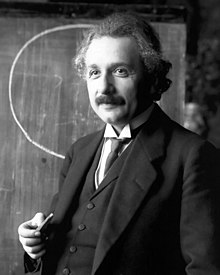
Professor Albert Einstein

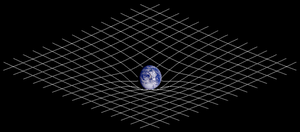
    After Newton, Professor Albert Einstein(1879-1955) tried to deal with how exactly the universe worked. He provided some important theories like the 'theory of General Relativity' where it described gravity as a geometric property of spacetime.      
    
     Einstein also described why all the other planets revolved around the sun and why all the moons revolved around their planets. He said that the space was where 'time' bends. He described space where all the four dimensions i.e length, breadth, height and time coincided with each other to form a layer like typolene. So like given in the above picture, when a heavy object was placed on it, it would bend. This is the same way that 'Time' worked. So when there were distortion in the time, causing a geometry. This geometry is interpreted as Gravity. Thus in that distortion, planets revolved around the sun, and moons around their planets.                      

Wednesday, February 9, 2011

The Universe

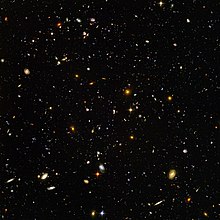
The Universe is a vast space filled with billions of trillions of galaxies including of all physical matter and such as planets, stars, dust etc..the Universe is commonly termed as the cosmos. The Greeks were the first to propose that the universe possessed infinite space and existed eternally.  Scientific revolutions in the ages that followed led to the discoveries of the elements of the universe. Scientists started to realize that the earth and its planets revolved around the sun and thus called this system as the solar system. Greek 'sol' meaning 'the sun'.                                                             


   The Solar System

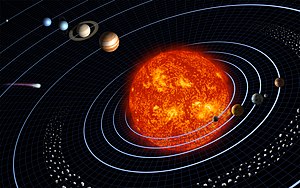
Then with the improvements in the field of astronomy, scientists discovered that the solar system was situated along with other billions of stars in the galaxy called as the Milky way galaxy.
The milky Way galaxy was seen and studied by the Greeks in the B.C periods. The sky looked like as if milk was poured in it and thus called it milky way galaxy.


The Big Bang:
  No one in the world knew how the universe began. A number of scientists tried but none but Georges Lemaitre succeeded. He proposed that the universe began 13 billion years ago. All the matter was contained in a space of 100 million light years. That place was very hot because of the collision between matter. But with a huge explosion causing all matter to scatter in different directions the universe had formed to what we know today. Edwin Hubble provided a proof for this by blowing a balloon with many spots on it. After he blew air into it, the spots scattered giving a very good proof that the universe began with a huge explosion.
This theory is called the Big Bang Theory.

Some things to remember:
1) The universe began 13 billion years ago.
2) The Sun was formed 7 billion years ago.
3) The Earth and other planets formed 4.5 to 5.5 billion years ago.

 However most of the night sky that we look at in the night is dark. The vast space is filled with space which is dark in colour not understood by man. This space of darkness is called the Dark Matter.

  From the Big Bang theory, the scientists expect that universe to grow more and more and further apart. One key piece of evidence for the big bang is the observed amount of helium in the universe. In 1948, Russian-born, physicist George Gamow and his collaborators, American physicists Ralph A. Alpher and Robert Herman, worked out in detail the nuclear reactions that would have occurred during the big bang. Their calculations indicated that 25% of the mass of the normal matter now present in stars and galaxies is helium. Astronomical observations have since confirmed this calculation.

 Two more theories:
1) Steady State theory: This theory offers yet another explanation of basic observations. According to this theory, the universe has always existed in its present state. As the galaxies move apart, new matter appears between them.
2)Cosmic Inflation theory: According to this theory, the universe expanded by an enormous amount in the early moments of the big bang.The inflationary expansion would have tended to smooth out temperature variations occurring over widely separated parts of the universe. Small variations in density would have led to the formation of galaxies.
   But the big bang therory is the most widely accepted of all the theories.


Thursday, February 3, 2011

History

    People needed a breakthrough for all the mythological beliefs. It was the time when people required a logical truth that explained the outside world unknown to them. The sun, moon moving up and down remained a mystery except for in mythologies. Aristarchus of Samos(310-250 B.C) first put forward a theory that could explain the motion of the other celestial bodies of the sky. That was the Heliocentric theory. But at that geocentric world of time, people did not believe him.


    Later, slowly, new scientists woke up who provided different methods to explain heliocentrism.
the first one was Nicolaus Copernicus
Copernicus
  
  Using Copernicus' theory, Galileo Galilei also explained the heliocentricism, and was able discover one of Jupiter's brightest moon in 1609. He gave another breakthrough to the science of astrophysics.
His invention of the telescope helped many other scientists discover many fascinating things of the universe.  


 Johannes Kepler, in 1609, provided some laws which came to be known as Kepler's laws of planetary motion, mainly by getting data from observatory of Tycho Brahe. 
     He proposed three laws :

  • The orbit of every planet is an ellipse with the Sun at one of the two foci.


  • A line joining a planet and the Sun sweeps out equal areas during equal intervals of time.[1]


  • The square of the orbital period of a planet is directly proportional to the cube of the semi-major axis of its orbit.


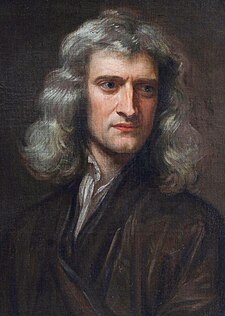
  •     About a century later, Sir Isaac Newton provided a link between Kepler's laws and Galileo's dynamic motion only to discover that all the elements of the universe were held together by a same force called as the Gravity or the Gravitational Force


          Sir Isaac Newton                                       Gravitational Force that keeps the planets
                                                                                                in their orbits

    Views for the Unknown


    It all began when the ancient people wondered what the dark, black sky was made up of. Then came the Mythologies, where people described each one of those elements of the Universe as a God or Goddess.
    In the Greek Mythology people thought the dark night sky was the gap between Heaven and Earth and thus called it Chaos the God of darkness and night.
    Then people gave different names for different elements like Cynthia, the Goddess of thesky; Chronosthe old God who turned the Heavenly wheel the constellation and etc..
    Thus people from different parts of the world different name to the unknown.

    To Begin With

    If any person wishes to become an Astronomer, he should be thorough with the science that deals with astronomy. This subject is Astrophysics.
    Derivation : Greek: Astro - meaning "star", and Greek: physis - meaning "nature"
    Astrophysics is a branch of Astronomy which deals with the study of the Universe, including the physical properties of the Universe.